
Our Family Culture Does Not Need to Make Sense to Outsiders
Families like mine are watched closely.
How we eat, sleep, learn, wash, leave the house, spend time together and speak to one another is often measured against a very particular idea of what family life should look like.
Meals happen at the table. Sleep happens at night. Learning happens during school hours. Family outings involve getting out of the car. Connection looks like conversation, eye contact and doing the same activity together.
For a long time, I thought that if I could just help us do those things more consistently, it would mean we were doing well.
There were times we could pull it off, too. We could make ourselves look like a family who moved through the world in familiar ways. The cost of that performance usually turned up later, behind the closed door of our home, where nobody else had to witness the overwhelm, distress, shutdown, conflict or exhaustion it had taken to get us there.
Eventually, I became less interested in whether our lives looked right and more interested in whether they actually supported us.
Life became possible when it became ours
Family culture is made up of the ordinary things we return to. The ways we care for one another, make room for each other ( and ourselves!) and find some steadiness together.
In neurodivergent families, those things can look significantly different.
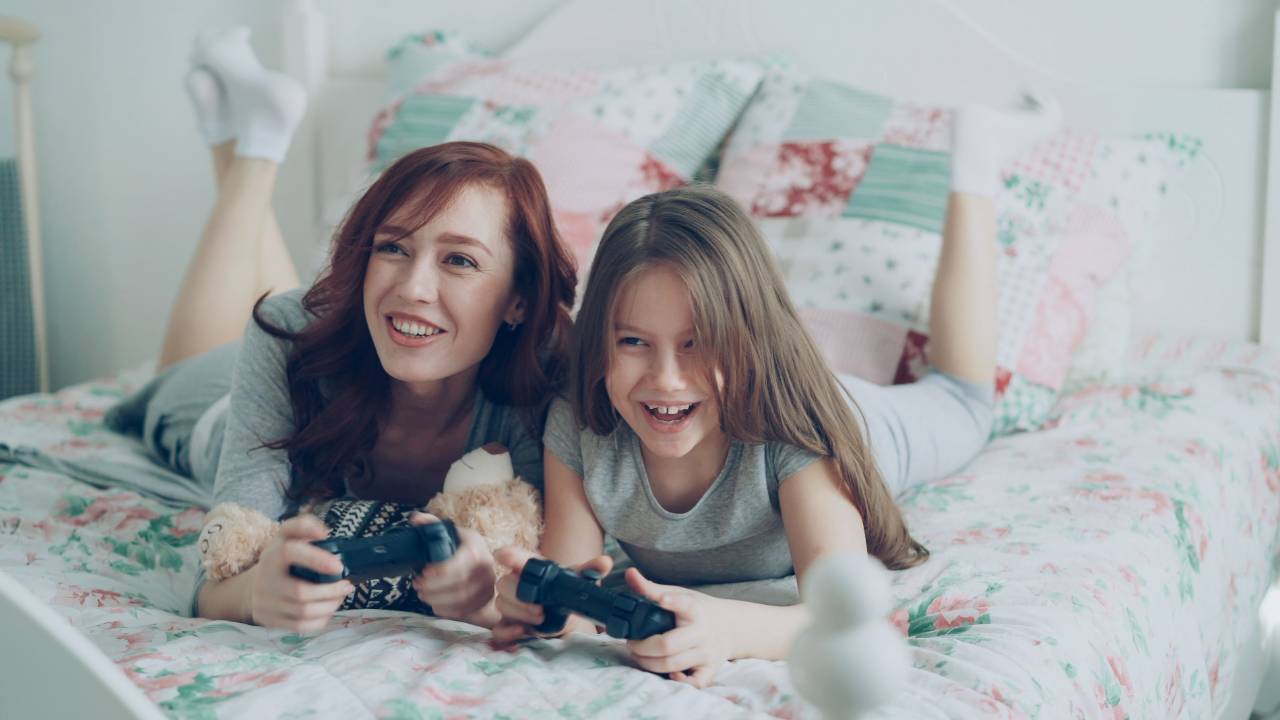
A meal eaten on the couch while we watch the same show may hold more warmth and connection than a tense dinner at the table. Sitting beside a child while they game may give us a way into their world without requiring them to stop what regulates them, turn towards us, find words and perform a conversation.
Sometimes a family outing is a drive with no expectation to get out of the car. We listen to music, pick up a drink, look at houses, visit a familiar place or simply move through the world from somewhere that feels contained and safe.
The drive, the meal, being beside one another all still counts.
None of these are failed versions of family life. They are family life.
Connection was never missing
I think we often miss connection because we've been taught to look for it in such narrow ways.
We look for eye contact, reciprocal conversation, shared enthusiasm, physical affection or everybody participating in the same thing at the same time. When those things are absent, it can seem as though a child is withdrawing from us or that the family is becoming disconnected.
Yet connection may be happening through parallel presence.
One person is gaming while another is scrolling. Someone else is under a blanket with headphones on. We may be in the same room without speaking, each occupied by something different, while the nervous system quietly registers that we're together.
There is no demand to respond correctly or to explain feelings. And ultimately, no requirement to make the moment appear relational in typical ways.
We are simply near.
For some of us, this is one of the deepest forms of companionship there is. We can remain ourselves in the presence of another person. We don't have to abandon what supports us in order to prove that the relationship matters.
Care can begin much further back
Hygiene is another place where family life can become saturated with shame.
A shower can involve temperature changes, noise, water hitting the skin, the feeling of wet hair, smells, transitions, undressing, seeing or touching the body and then having to get dressed again. By the time somebody appears to be “refusing a shower”, the experience may already contain far more than anyone around them can see.
Care may need to begin with wipes, a bowl of warm water, dry shampoo, changing one item of clothing or washing one part of the body.
Sometimes the most important change is the way we speak about the body in the first place.
When shame enters care, the body becomes something that must be managed for other people. When we reduce shame, we create room for trust. We can be curious about what is difficult, what can be tolerated today and what might make the experience gentler.
That's not a lower standard of care, but care that the person can actually receive.
The outing may be the drive
There have been so many times when families have arrived somewhere and a child has been unable to get out of the car.
From the outside, it can look as though the outing has failed. The destination was the point, after all. We packed, planned, travelled and made it all the way there.
But perhaps getting into the car was the outing.
Perhaps travelling there was enough contact with the world for one day. Maybe sitting in the car park, seeing the building and then going home has created familiarity that will support someone later. Nothing needs to be gained from it at all beyond an hour spent together without forcing the nervous system past its edge.
When there is no pressure for the drive to become something else, it can begin to feel safe in its own right. I spent, and continue to spend many a Sunday or a weeknight evening driving through our local streets, or through the city looking at the lights while we rest - my children with their blankets and snacks and playing our favourite music. And me taking a break from being on my feet.
Learning follows interest, readiness and relationship
Learning in our homes has rarely moved in a straight line.
It can happen through television shows, games, animals, maps, cooking, building, scripts, repeated conversations, projects and passionate arguments at midnight. It may be invisible to people looking for worksheets, completed tasks or knowledge produced on demand.
I've seen many children learn enormous amounts when an interest (importantly self led!) offers the doorway. The learning is alive because it belongs to them. It grows through curiosity, repetition, experimentation and the freedom to return to it again and again.
The same is true of rest.
Rest may happen at unusual times. Sleep may come after midnight or during the day. Somebody may need to lie in bed for hours without sleeping because reducing input is the only way their system can recover.
A socially acceptable schedule tells us very little about whether a person is rested.
Sometimes our task is to notice what the body is trying to do and stop dragging it back towards a rhythm it cannot currently sustain.
What looks like giving up
From the outside, adaptations like these may look like we have stopped trying.
The child is eating on the couch. Nobody is insisting on the shower. The outing ended in the car park. Gaming continues. Sleep happens at strange hours. Family members occupy the same room without talking.
People may wonder where the boundaries have gone, whether avoidance is being reinforced or whether life is becoming smaller.
Inside the family, something else may be happening.
Food is being eaten. A body is being cared for without humiliation. The world is being approached safely. Learning is happening through an interest. The nervous system is resting. Connection is returning without being demanded.
These can be the first signs of life coming back.
When a family has been living in prolonged distress, recovery doesn't always announce itself through big achievements. It may begin with a child staying in the room a little longer, laughing at something on the television, asking for a particular food, tolerating a wipe across their face, showing us a game or wanting to come along for the drive.
The smallest signs can tell us that there is more capacity than there was before.
A culture built around the people who live here
Our family culture does not need to make immediate sense to everyone outside it.
It needs to hold the people living within it.
That culture can be flexible, unconventional, untidy and alive. It can change from one day to the next because our capacity changes too. It can include long periods of recovery, unusual forms of connection and care that begins exactly where somebody is.
We have not failed because we stopped performing normal.
We may finally be building lives that support us.
Kristy Forbes | inTune Pathways