
I Stopped Getting Up to Play. I Started Playing From the Floor.
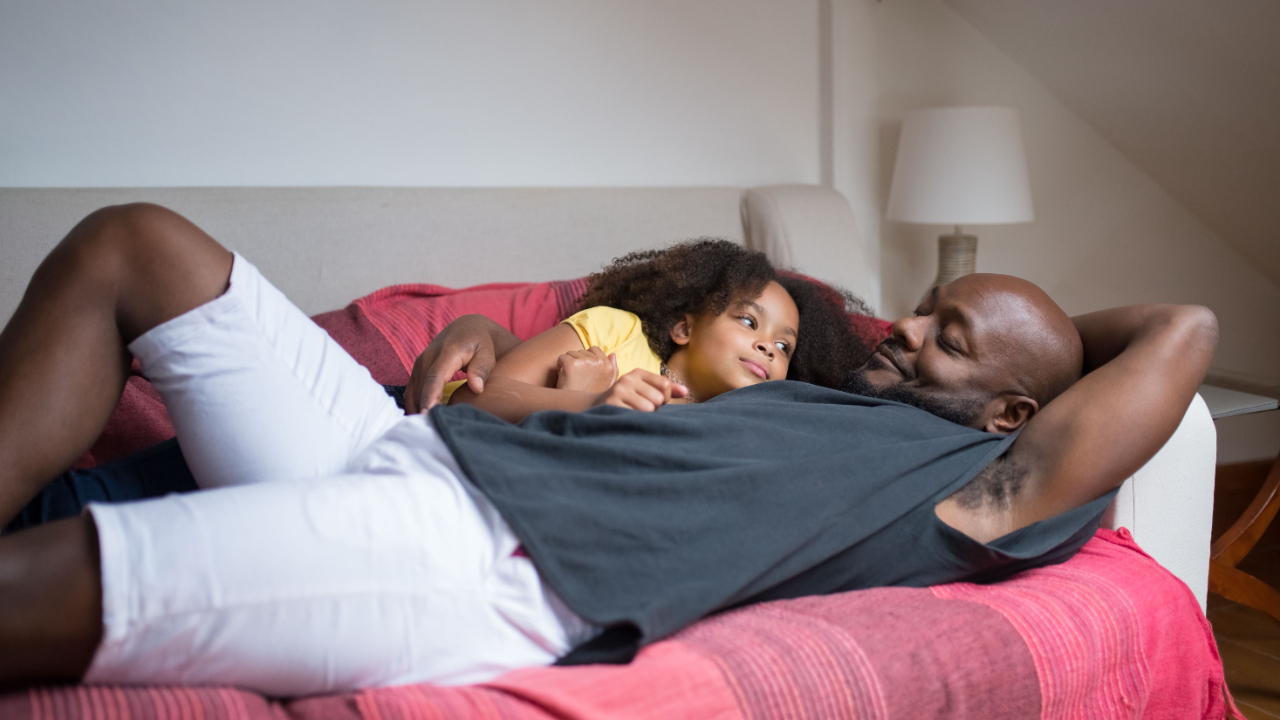
There was a long stretch of years where I believed I was failing my children because I couldn't get up.
I'd absorbed all the messaging about play. Get on the floor. Follow their lead. Be animated, be available, enter their world. And I wanted to, because I love my children and I love being near them. But I was exhausted in a way that sleep didn't fix, I was in pain a lot of the time, and the version of playful parenting I'd been handed required a body I didn't have.
I'd come from a background of early childhood education, so this made things so much worse in terms of knowing I had the skills but couldn't always implement them. But I'd also had enough of beating myself up.
So I stopped trying to be that parent. I started playing from the floor instead, and what I found down there was more connection than I'd ever managed upright.
Connection from horizontal
Some days, getting on the floor and not getting up again was the most generous thing I could do for myself.
Connection doesn't always require us to be upright. It doesn't always require us to be entertaining. Side by side, breathing the same air, that counts as connection and presence.
I think a lot of parents are carrying an idea of connection that's actually performance. Voices doing characters, bodies moving, games being facilitated, energy being generated. And when the energy isn't there, the assumption is that the connection isn't available either. That wasn't true in our house. What my children responded to most was the simple fact of my body being near theirs, without them having to earn it or manage me.
Couch co-existing
Both of us on the couch. Me beside them. Them, with whatever they were into.
Sometimes we weren't interacting at all, and we were still making memories. Children tend to remember their parent's presence most. Just in the same room, me watching them, hearing all about their interests.
Parallel presence was often one of the most regulating things I did all day. For them and for me. There was no demand embedded in it, nothing they had to respond to, no eye contact to hold, no conversation to sustain. Just the fact of us both being there.
Introducing my own activities
Gradually, once they trusted my presence, I was able to slowly introduce my own activities so I could regulate myself. Knitting. Colouring. Still present, still there, but with something in my hands.
This allowed the practice of safety via consistency, so my child could learn that they were safe and had access to me no matter what I was doing. My attention wasn't a resource that had to be monitored. It was just there.
Reading out loud
Every Thursday, we'd visit the local library and choose books.
On the way home we'd drop in to the local bakery and choose something for lunch, then back at home we'd set up a reading fort. Blankets, pillows, stuffies, whatever we wanted while we read our content hearts away.
I could do that lying down. It became one of the most reliable rhythms we had, and it asked almost nothing of my body.
Watching their thing
I laid beside them and let them show me the YouTube channel. The game. The video.
I didn't have to be truly interested. I just had to be there. I'd ask questions, remark on the great colours, or ask how they learnt those skills.
Letting them be the host of the experience put them in their power, and let me rest my body. There's something significant in that swap. So much of a PDA child's day involves being the one who has to receive, comply, follow, absorb. Being the expert in the room, the one who gets to explain and lead and choose what happens next, is regulating in a way that no structured activity I could have organised would have matched.
Hand on their back
Sometimes the play was just my hand on their back while they did their thing.
Skin contact. Steady breath. No demand to talk.
Some days we'd set up a tent in the lounge and fill it with cushions and pillows and blankets and books and iPads, or face the tele. A soft enclosed space where nobody had to be doing anything in particular.
Cloud watching
Out on the deck. On the trampoline. On a picnic rug on the lawn. Pillows on the grass.
Bodies down. Eyes up. Nothing to do but notice what the sky is doing.
Sometimes we'd have snacks or a plate of lunch and music beside us. It's free, it's accessible, and it was one of our favourite things to do.
Making movies
Sometimes I'd film them doing their thing, with the idea to make a movie.
Sometimes it was an action movie in the backyard, or them creating an instructional Minecraft gameplay. Then we'd sit with popcorn and watch on the big screen all afternoon.
I was resting my body filming from the backstep or from a chair, and then chilling on the couch. They got hours of creative autonomy and a genuine audience, and I got to be horizontal for most of it.
Being the patient
"Everyone, the most experienced Dr in the world is about to enter!" I'd call out from the bed we'd made on the floor.
I was the patient, they were the Dr. I rested, they got their injection of importance and fun all in one.
I had to do as I was told, which they loved. There were some days I'd do anything at all, as long as it was from the floor, the couch or the bed.
Entertainment from bed
The slower afternoons, where we watched funny dog or cat videos on YouTube, were the best. Snuggled up, laughing together.
We'd also use the filters on Snapchat or other apps to create hilarious videos of ourselves, all while laying down.
Laughing together does something to a nervous system that no amount of careful regulation strategy can replicate.
Horizontal is honest
I don't have to be the upright, organising, available parent every minute.
Sometimes the most loving thing I can offer is the truth. I'm tired, I'm here, and I'm resting my body as best as I can.
Modelling that rest is allowed is one of the most important lessons I teach. My children are growing up in bodies that will need rest too, and a lot of them will be pushed past their limits by systems that don't recognise those limits exist. If the only version of me they ever saw was the one pushing through, that's the template they'd inherit.
Laying down. Staying near.
They don't need me upright.
They just need me present.
Kristy Forbes inTune Pathways