
I Stopped Trying to Hold It All Together. I Let Them See Me Being Human.
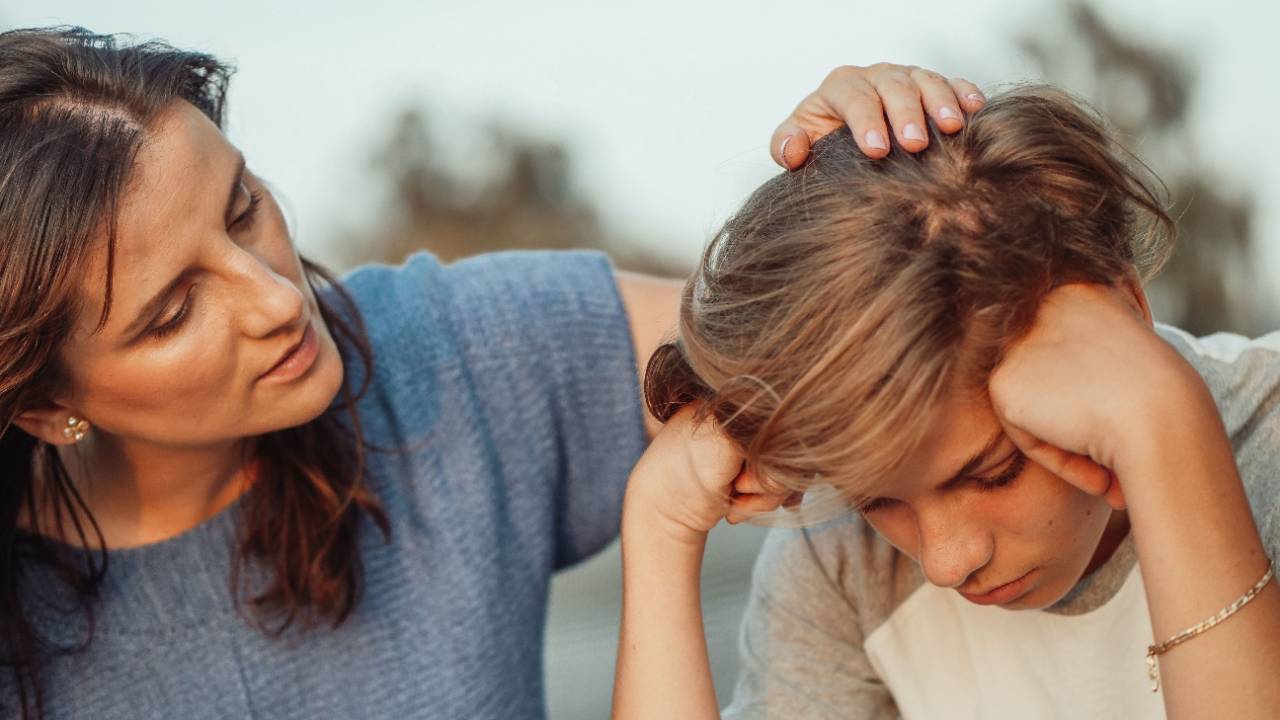
For years I thought good parenting meant staying calm on the outside no matter what I was carrying underneath.
I got that from everywhere. Hold it together. Don't let them see you rattled. Be the steady one. And I tried, I really did, for a long time. What I didn't understand then is that a PDA nervous system often reads through a mask instantly.
Composure landed with my PDA children as dishonesty, and dishonesty landed as danger.
What actually built safety was letting them see the real me. The confused, the tired, the trying me.
"I have no idea how to handle this"
One of the most helpful sentences I ever said out loud in front of my kids was "Well, I am officially stumped and have no idea how to handle this one."
It ended the performance. It handed the moment back to what it actually was, which was a bunch of humans trying to figure something out together.
It cut through the power imbalance and the pressure I placed on myself to get it right, and the ways in which my child could see I was grasping at straws when really I could just let go and not know.
There's a relief in that for everyone. My child no longer has to pretend they believe me. I no longer have to hold up something I can't hold up. We're just there, in the not knowing, together.
Modelling the humanness
"My chest is tight and I can't think straight." "I'm frustrated and I need a minute."
Anything I said or did was banked as permission for them to do the same. If I was allowed to name what I felt, so were they. Of course, our children will be at different stages in this, and there will be times where being so honest may not be the right thing. I had to trust myself to know what was right at the time.
My children eventually learned it was safe to not know, to make mistakes, to work at things and be sorry.
We were all on the same even playing field when it came to being human. We were learning and growing together.
That's the part I wish I'd understood earlier. My children weren't watching me for competence. They were watching me for what's permitted. Every time I named something honestly, I widened the range of what they were allowed to be.
Not suiting up, not taking charge
Parenting culture tells us to mask, suit up, be in control no matter what.
It also encourages us to judge, and even bully parents who aren't 'in control' of their children, to the point of making comments that inadvertently threaten violence. "Leave them with me for ten minutes and I'd fix them." "There's no way that would be allowed in my home." Always by those who don't live inside the lives and families we do.
I don't see or hear strength or leadership in that. I hear fear and insecurity, and a PDAer sees through that in a second.
Authority delivered from behind a mask reads as a threat, not a safety.
A dash of silliness
"I can't. My legs fell off in my sleep last night."
"I'm scared to take the bins out alone, I don't wanna be abducted by aliens again."
When the room feels heavy, a small piece of ridiculous can crack it open. Not to distract from what's real, but to remind us we're still in it together.
Silliness is also a form of letting go. It says I'm not holding rank right now, I'm just here with you.
"Let me try that again"
Another powerful sentence in my parenting.
It says: I'm not defending what I just did. I'm showing you that a person can notice, name, and go again. That's the whole practice.
This takes practise for adults conditioned to do very differently in relationship with children. And that's actually a great thing, it allows our children to witness our humility and to learn it's safe for them too.
They're always watching, always learning.
Real, not perfect
A safe adult for a PDA child isn't the one who never wavers.
It's the one who owns their humanness. Who can apologise. Who can reflect. Who can show that being real is safe.
Again, it takes practise.
As my children get older, I share more of my process with them. "I'm sorry about that. That's not how I want to respond really. I panic about ridiculous things that I used to think mattered and honestly, they don't. Sorry, my baby."
Human, growing and learning together
Composure isn't the same as safety.
Honesty is.
Kristy Forbes inTune Pathways