
What self compassion actually looks like for parents and carers raising PDAers
I need to start by saying this isn't the kind of self-compassion post where I tell you to go have a bath and light a candle. Being told to "look after yourself" when you're grossly unsupported can feel like gaslighting, and I'm not interested in adding to that. So this isn't that. This is something different.
I've been thinking a lot about what self-compassion actually looks like in the context of raising PDA children, and I keep coming back to the fact that most of what we're told about it doesn't account for the reality we're living in. It doesn't account for the dysregulation, the isolation, the grief, the relentless nature of what our families are navigating. So we either dismiss self-compassion entirely because it feels like a luxury we can't afford, or we try to do it in the ways we've been taught and it doesn't land because it was never designed for lives like ours.
So, I wanted to share what it actually looks like for me. Not as a prescription, just as an honest account of where I've landed after a lot of trial and error and 28 years of parenting PDAers and of course, being PDA.
Offering ourselves low demand
This is the first one and it's the one I come back to the most. We can stay in our tracky dacks. Let the dishes sit. Maybe we don't shower today. Self-compassion lives within our locus of control, without pressure, without guilt.
I know how that sounds to some people. I know there's a voice in a lot of our heads that says that's lazy, that's giving up, that's not good enough. But I've had to sit with the reality that on some days, the most compassionate thing I can do for myself is to not add a single demand to what's already an overwhelming load. And that is far from failure. It's actually an incredibly wise, self-aware response to a nervous system that is already stretched beyond capacity.
Finding rest in our child's rest
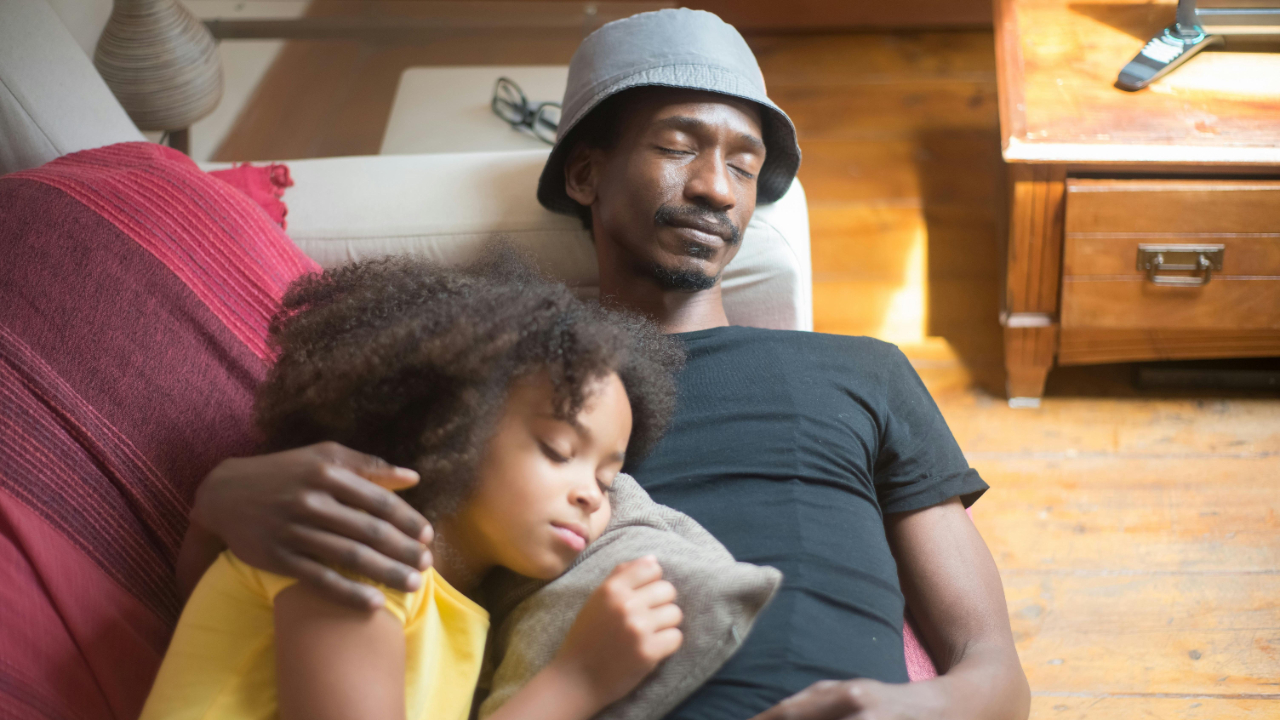
This one changed things for me. Laying next to my kids while they game. Watching telly while they're in bed. Co-sleeping. Doing my own thing alongside theirs. Parallel anything is family culture in our home and it counts.
For a long time I thought rest had to look a certain way. That I had to be separate from my children to get it, that it had to involve time alone or something structured. But the truth is that some of my most regulated moments have happened lying on a bed next to one of my kids while they're doing their thing and I'm doing mine. Nobody's asking anything of anyone. We're just existing in the same space and that is rest for both of us.
Saying no
Cancelling what isn't a priority. Letting go of therapies that aren't helping. The energy we spend anxious over things we can't control feeds into disconnection, for us and our children.
I've had to get really honest with myself about what I'm saying yes to and why. Am I saying yes because it's actually serving my family, or am I saying yes because I'm terrified of what people will think if I don't? Because there's a difference, and that difference was costing me and my children a lot of energy that we didn't have to spare. That also extends to family BBQs and outings. If the uninformed, unsolicited advice, no matter how well intentioned is hurting myself or my children, it has to go (for me).
Weeding and feeding
What needs to go from my life? What needs more of me? I've been asking myself these questions more and more, and the answers aren't always comfortable. Culling people, places and things that don't support my wellbeing is something I have the right to do. It took me a long time to believe that, because I'd internalised the idea that putting myself first was selfish. But a dysregulated caregiver is not a failing one. They are a threatened one. Sometimes the most important thing I can do is remove what's threatening me so that I can actually be present for my kids.
Being human, not perfect
Regulation doesn't mean calm all the time. When I lose my cool, I go back. "I didn't like how I handled that. I'm sorry." Repair is more powerful than perfection and I have to remind myself of this constantly because the perfectionism runs deep. I spent years believing I had to be the calm parent, the regulated parent, the parent who never raised their voice. And what that actually created was a pressure cooker where I was so focused on performing calm that I wasn't actually present. Now I mess up and I go back. And my kids see that and it matters more than me getting it right in the first place. Most realistically, expecting myself (or anyone for that matter!) to be calm all of the time under often excruciating circumstances was setting myself up for failure.
Unlearning the conditioning
This is the big one and it's ongoing. Exploring the ideas of laziness and selfishness that I've internalised. The blame was never ours to carry. Again, a dysregulated caregiver is not a failing one, they are a threatened one. And the narrative that "our children thrive when we do" isn't always true, and it adds to the ongoing internalisation of self-blame.
Our children are, however, always watching how we treat ourselves. If our family is even one percent better than what we grew up with, that is generational change. We are the beginning of it, and I hold onto that on the days when it feels like nothing I'm doing is enough, because even the smallest shift matters. Even the fact that we're thinking about this at all is evidence of change.
Why conventional strategies backfire for our PDA children
So many of us are carrying the weight of regulation strategies that don't work, and we blame ourselves for that. I've said all the well-meaning phrases. "Just take a deep breath." Sounds soothing, reads as instruction. "Let's try mindfulness." Asks for an engagement a threat-loaded brain can't give. "You just need to calm down." The most activating sentence we can speak, a demand wearing a kind voice.
What's actually happening when our PDA child is in threat response is a nervous system event. Their prefrontal cortex is offline, the thinking and reasoning brain isn't available. The amygdala is running the show, the survival brain has taken the wheel and its only job is to protect. Their body is flooded with adrenaline and cortisol, the same response the body has to a physical threat. Willpower is not a factor. Not for the child, not for us. We cannot reason a nervous system out of threat mode.
And it goes deeper still. For a PDAer, someone imposing their version of calm can register as yet another demand; quietly triggering the exact response we're trying to soothe. What's often needed isn't simple guidance. It can also be safety, autonomy, and a body that feels free.
The three principles I keep coming back to are these:
Autonomy over instruction, because regulation for a PDA child is often best shared rather than handed down and it helps to be chosen by the child.
Co-regulation is relational, it's not us being calm enough to fix them, it's presence, being met where they are, letting them lead, or just being with.
And it takes time. Sometimes weeks, months, or even years. The slow, quiet work of connection is the work.
And that brings me back to self-compassion. Because if this is the reality of what we're navigating, if the work is this slow and this relational and this constant, then I need to be extending the same gentleness to myself that I'm practicing extending to my children. Not as a luxury. As a necessity.