
I Stopped Pulling Them Out of Their World and I Started Stepping Into It
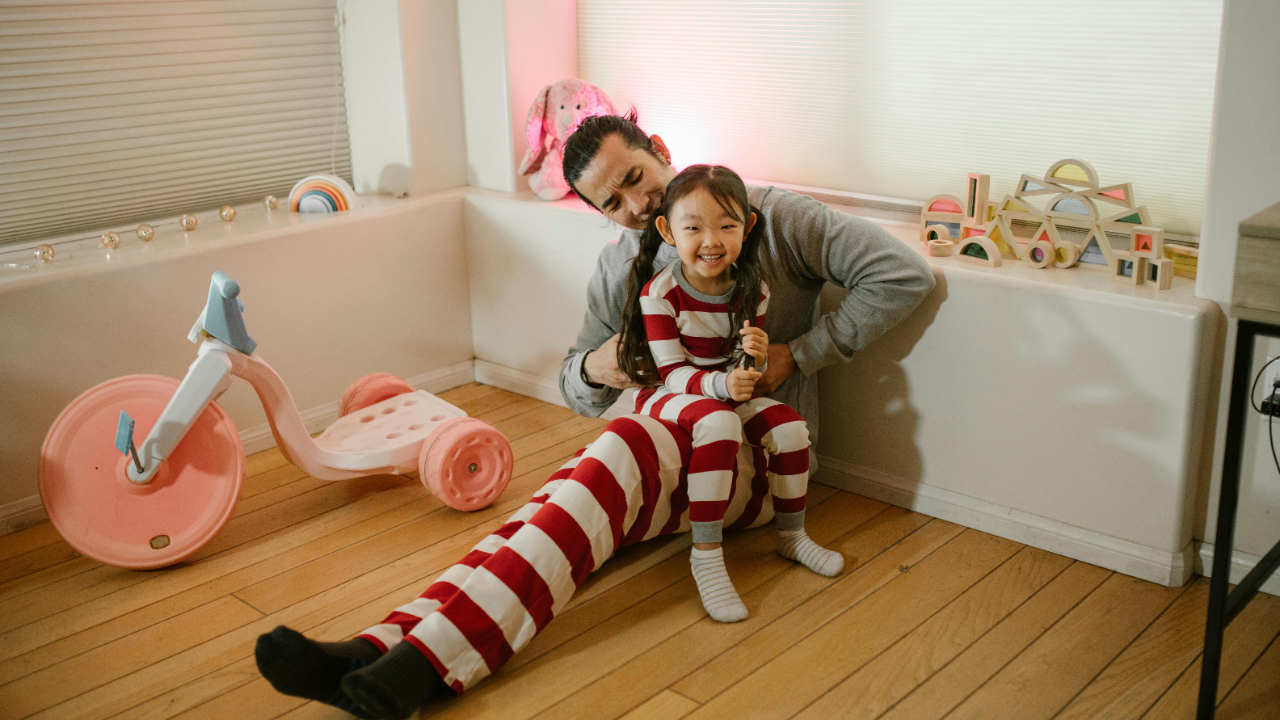
Imagination isn't a problem. I really want to say that upfront because for so many PDA kids, imagination is how they stay connected to the world, not how they escape it. Role play, characters, other realities, these are bridges, not burdens. And when I stopped trying to fix it, I finally got to share it.
For a long time I treated my children's imaginative worlds as something to manage. Something to redirect, contain, or gently steer back toward "real life." I didn't understand that for them, those worlds were real life. They were the safest version of it. And every time I tried to pull them out, I was pulling them away from the one place their nervous system had found some peace.
So I stopped pulling them out. I started stepping in.
Playing the part they cast
My child and I became sisters at a cafe. We ran a pretend shop. We drove to Macca's with a paper card via the kitchen. They told me who I was and I went with it.
I can't overstate how much this changed things between us. When I let my child direct the play, when I let them assign me a role and I just committed to it without trying to steer it or make it educational or add my own agenda, suddenly conversations that felt impossible in real life became easy in character. Things they couldn't tell me as my child, they could tell me as my sister in a cafe. Things they couldn't ask for as themselves, they could ask for as a shopkeeper or a character or a version of themselves that felt safer to be.
The play wasn't the distraction from connection. The play was the connection.
Honouring the stuffies
Excuse me, they're not stuffed animals. They're family members. They come to dinner, play board games, roll the dice and have opinions. They get their own cup of tea, plate of biscuits and space in the bed.
I know how this looks from the outside and I stopped caring about that a long time ago. Because taking my child's world seriously is how they learn it's safe to bring it to mine. When I dismissed the stuffies, or rolled my eyes, or treated it as something they'd grow out of, what I was actually communicating was that the things that mattered to them didn't matter to me. And for a PDA child who is already navigating a world that constantly tells them they're too much or not enough, that dismissal lands hard.
So the stuffies have names and roles and preferences and we honour all of it. Because that's what respect looks like when you're six or twelve or honestly any age at all.
Not afraid of dark themes
Villains, horror, gore, characters who are misunderstood. My PDA children often saw themselves in villains because that's who the world doesn't understand either.
This one was confronting for me at first. I wanted to redirect it, soften it, steer them toward lighter stories. But when I got curious about what they were drawn to instead of pulling them away from it, I started to understand something important. The dark themes weren't a red flag. They were processing. My children were working through their experience of being misunderstood, of being seen as the difficult one, of being the person in the room that nobody quite knows what to do with. And the villains in their stories were doing that work for them in a way that felt safe.
Getting curious about what they were drawn to instead of pulling them away from it opened up conversations I never could have had otherwise.
Getting silly first
Silly songs, toilet humour, using an avocado to create "poo on toast." If that's what gets them to touch the food, we go there.
In our house, silliness, imagination and play is a magic bullet for almost everything. Getting dressed, eating, transitions, leaving the house, coming back inside, getting into the car. The moment I stopped trying to make these things happen through instruction and started making them happen through play, the resistance dropped. Not because the demand disappeared, but because the demand was wearing a costume now, and a demand in a costume is a lot less threatening than a demand in a serious voice.
I had to let go of the idea that parenting had to look serious to be effective. Some of the most important parenting I've done has happened while I was being completely ridiculous.
Imagination as bridge
"Let's go through the portal to the next part of our day." "What do you reckon we'll see in the portal today?"
Transitioning through story is easier than transitioning through instruction. This was one of the biggest practical shifts in our daily life. Transitions are one of the hardest things for PDA children because every transition is a demand, and often a stack of demands all at once. But when the transition is wrapped in story, when it's framed as an adventure or a portal or a journey rather than a list of things that need to happen now, the nervous system has something to hold onto that isn't threat.
I'm not saying it works every time. But it works so much more often than "come on, we need to go" ever did.
Adults play too
Gaming, cosplay, cosy worlds, fantasy books and movies. We don't outgrow the need for imagination, we just get shamed for it.
I had to look at my own relationship with play and imagination before I could fully honour my children's. I'd been taught that play was for kids, that imagination was something you grew out of, that being an adult meant being serious and productive and grounded in reality. But the truth is I still need play. I still need cosy worlds and fantasy and silliness and escape. And when I stopped pathologising that in myself, I stopped pathologising it in my children.
It's okay to step into the world they built for safety. Imagination is how they stay here. Not how they leave.
Kristy Forbes inTune Pathways